Demo systems · synthetic data
Rules catch the problems. AI writes the follow-up.
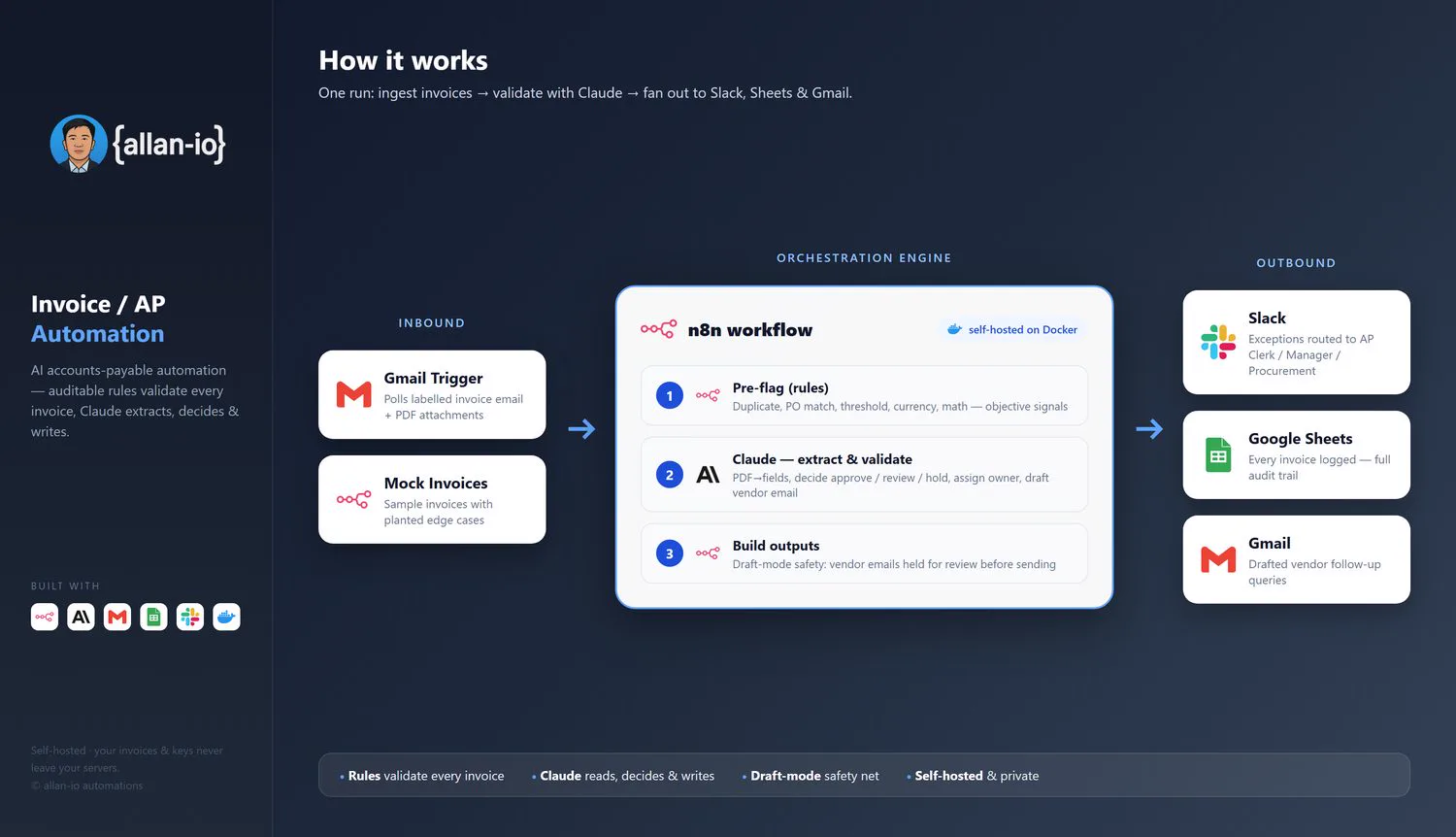
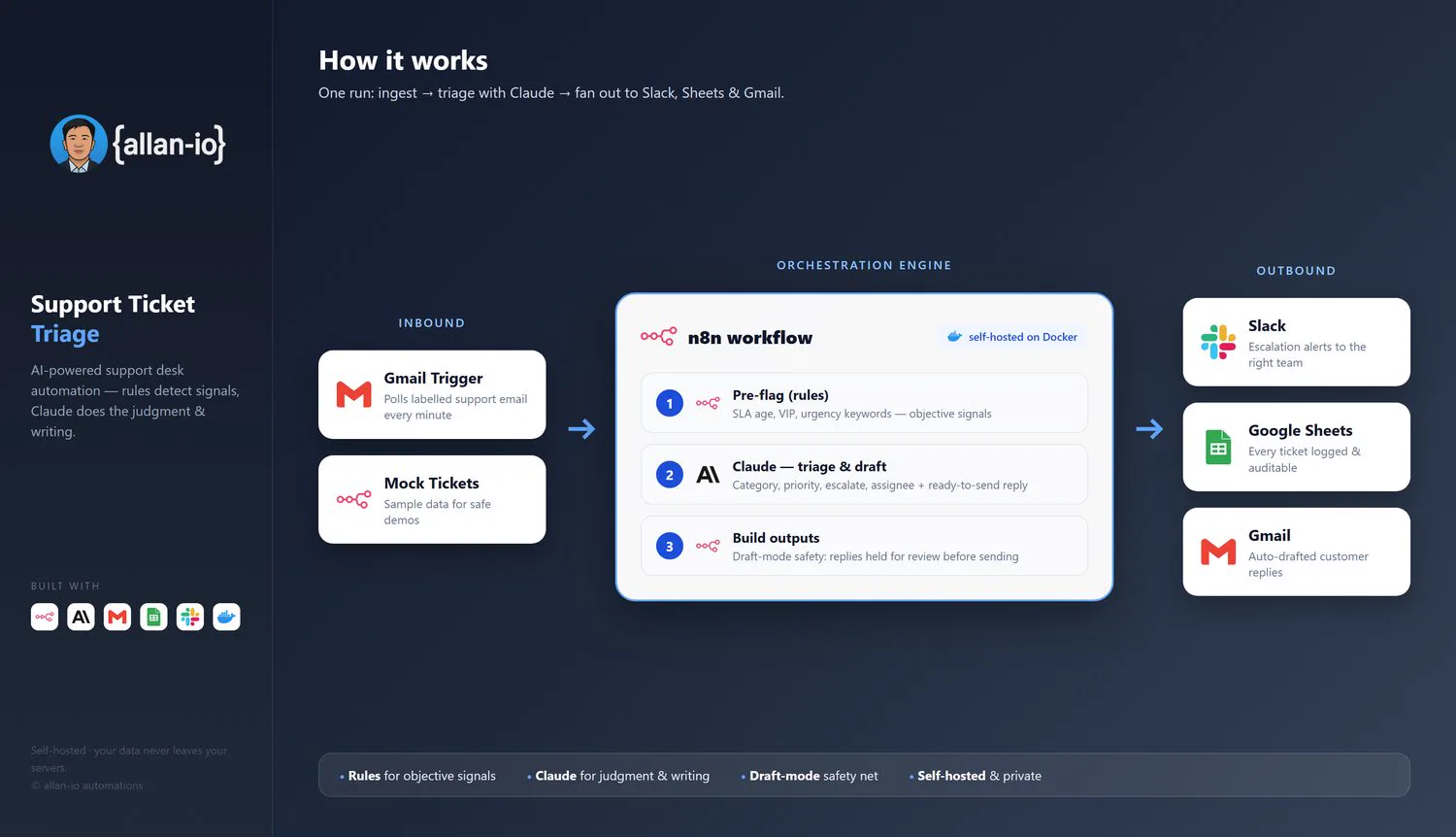
Two demo systems on the same backbone: one validates vendor invoices, the other triages support tickets. Code catches what can be checked; Claude judges and drafts; a person sees every risky item.
- n8n
- Claude
- Gmail
- Google Sheets
- Slack
- Docker
The problem
- Accounts payable teams check every invoice against purchase orders by hand, and duplicates or wrong totals still slip through.
- Support teams read every ticket to find the few that are urgent: a customer about to cancel, or a VIP waiting too long.
What I built
- Objective checks are code, not AI: duplicates, PO matches, thresholds, currency, math, SLA breaches, VIP flags.
- Claude reads what code can't (the PDF, the tone of a ticket), decides within those rules and drafts the email or reply.
- Draft mode by default: nothing is sent to a vendor or customer until a person approves it. Everything is logged to a sheet.
How it works
4 steps, start to finish.
- step 01
Collect
Gmail picks up labelled invoice emails (with PDF text extracted) or inbound support emails.
- step 02
Pre-flag with rules
Invoices: duplicate, PO, threshold, currency and math checks. Tickets: SLA, VIP and keyword checks.
- step 03
Claude decides and drafts
Invoices: approve, review or hold, with an owner. Tickets: escalate or draft a reply. Temperature 0, JSON only.
- step 04
Route
Exceptions go to Slack for the right person, every item is logged in Google Sheets, and drafts wait in Gmail.
By the numbers
What it adds up to.
Results on the synthetic test batches in each project's README. A production-style intake and approval version runs to 43 nodes.
Next step
Want something like this?
A free 20-minute video call, online and with no obligation. Tell me what you need and I'll tell you how I'd build it.
Book a free call